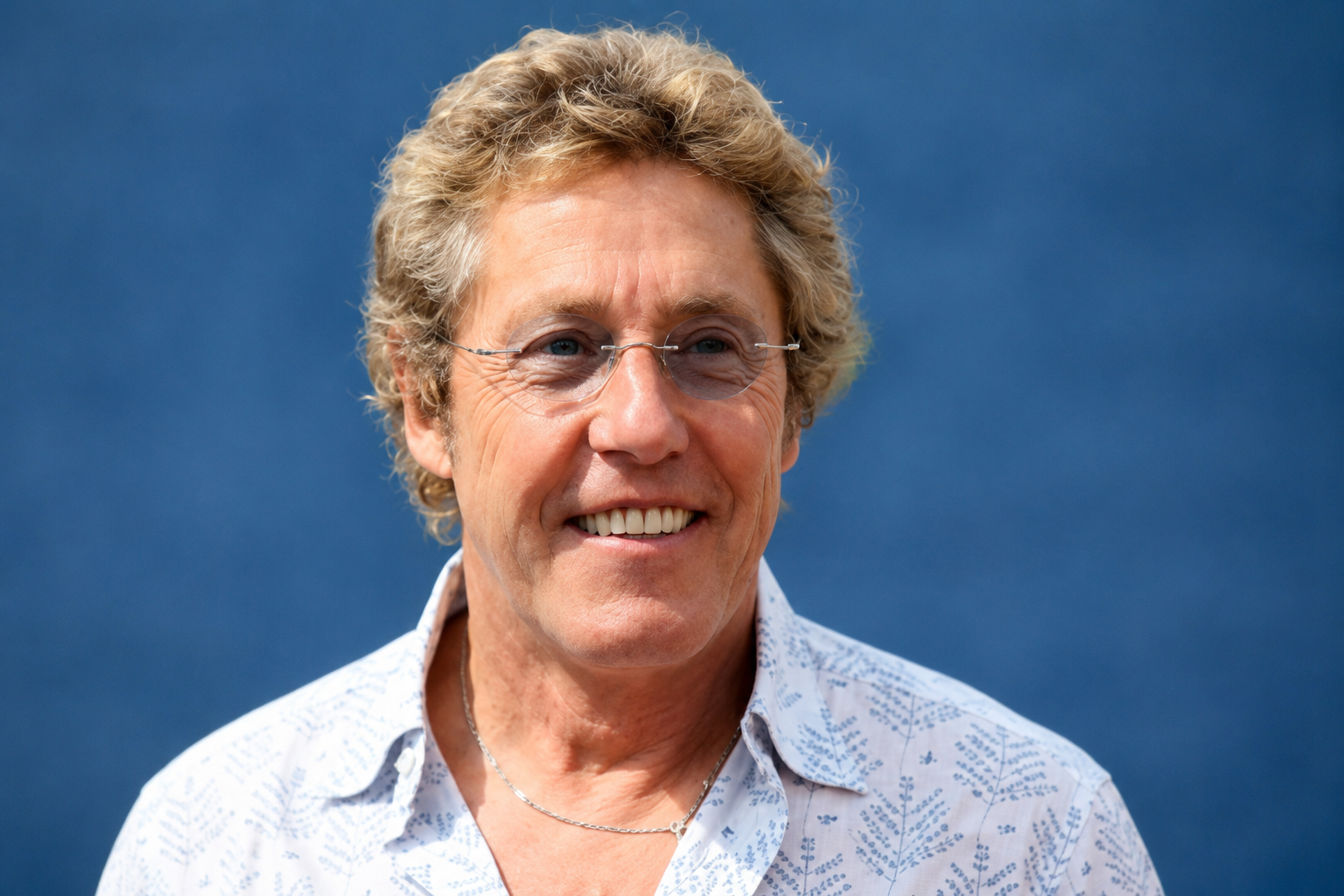
The net worth of Roger Daltrey is most commonly put at around $90 million (roughly £70 million), the figure Celebrity Net Worth publishes and that almost every other page then copies. You’ll also see outlier claims stretching to $150 million or even $200 million. We’ll explain that gap shortly, because it matters — and none of the pages ranking for this term bother to.
- Net worth: ~$90 million (most-cited); higher estimates conflate personal wealth with The Who’s collective value
- Age: 82 (born 1 March 1944, Hammersmith, London)
- Role: Lead singer and co-founder of The Who
- Main income: Catalogue royalties, touring, sync licensing, acting, plus property and a working trout farm
- Residence: Holmshurst Manor, East Sussex
Most articles stop at the number. The useful question — how a singer who wrote almost none of his band’s songs built a nine-figure fortune — is where the real story is.
How Rich Is Roger Daltrey, Really? Explaining the Estimate Spread
Here’s the thing the aggregator sites never address: why do reputable-looking outlets quote anything from $90 million to $200 million for the same man?
The answer is that they’re measuring different things. The $90 million figure is a reasonable estimate of Daltrey’s personal net worth. The inflated numbers usually fold in the value of The Who as a brand — the catalogue, the master recordings, the trademark, the touring entity — which is shared and, in the case of the songwriting, weighted heavily toward Pete Townshend.
There’s a second reason to treat any single figure with caution. Celebrity net worth estimates are rarely audited; they’re back-calculated from known album sales, tour grosses and property. Nobody publishing these numbers has seen Daltrey’s tax return. Read $90 million as “comfortably in the high tens of millions,” not as a precise valuation.
The Who: Decades of Catalogue Royalties
The Who have sold well over 100 million records worldwide across a catalogue that includes My Generation, Tommy, Who’s Next and Quadrophenia. Six decades of sales throw off two distinct royalty streams, and the distinction is crucial to understanding Daltrey’s money.
Recording royalties are paid to the performers for the use of the master recordings. As the voice on the records, Daltrey earns from these. Publishing royalties are paid to the songwriters — and here Daltrey is at a structural disadvantage, because Townshend wrote the overwhelming majority of The Who’s material. That single fact shapes the entire wealth comparison between the two men (more on that below).
The streaming era has quietly extended the catalogue’s life. Anthems like Baba O’Riley and Won’t Get Fooled Again now generate perpetual micro-payments from Spotify, Apple Music and the rest — modest per play, meaningful across billions of streams and a globally recognised back catalogue.
Then there’s the windfall the generic pages skip entirely: sync licensing. Since 2000, the CSI television franchise has used Who songs as its theme music — Who Are You for the original, Won’t Get Fooled Again for CSI: Miami, Baba O’Riley for CSI: NY. A hit US network drama running for years, repeated in syndication worldwide, is one of the most lucrative licensing arrangements a legacy act can land. It kept the band commercially relevant to a generation that never bought the albums.
Touring Income: The Who’s Ongoing Live Legacy
For heritage rock acts, the economics flipped years ago. Recorded music pays a trickle; touring pays the bills. A band of The Who’s stature can gross in the tens of millions across a single arena run, and Daltrey and Townshend have toured under the Who banner repeatedly through the 2010s and 2020s — including symphonic “Moving On!” and “The Who Hits Back!” dates that paired the band with full orchestras.
Ticket pricing for legacy tours has climbed sharply. Premium and VIP packages for a band with a genuine claim to “see them before they stop” can run into the hundreds of pounds, and demand from an ageing, affluent fanbase has proved remarkably inelastic. For an artist of Daltrey’s era, live income has almost certainly outpaced recorded-music royalties over the past two decades.
Beyond The Who: Solo Career, Acting, and Books
Daltrey diversified early, which is part of why his personal wealth holds up despite the songwriting split.
His solo career produced hits like Giving It All Away (1973) and a run of albums that, while never eclipsing The Who, added an independent income stream. More distinctively, he built a genuine second career as an actor. He starred as the title character in Ken Russell’s 1975 film of Tommy, played the lead in McVicar (1980) — which he also produced — and took television and stage roles across the following decades. Acting fees and, in the cases he produced, back-end participation broadened his earnings beyond the band.
His 2018 memoir, Thanks a Lot Mr Kibblewhite, was a bestseller in the UK, adding book royalties and a well-received audiobook to the mix. None of these are fortune-makers on their own, but together they explain how Daltrey’s personal net worth stays robust.
Roger Daltrey vs. Pete Townshend: Comparing Net Worths
This is the comparison readers most want and competitors rarely make. Pete Townshend is generally estimated to be wealthier than Daltrey — figures around $130 million circulate for Townshend against roughly $90 million for Daltrey.
| Roger Daltrey | Pete Townshend | |
|---|---|---|
| Estimated net worth | ~$90 million | ~$130 million |
| Role in The Who | Lead vocals, co-founder | Guitar, principal songwriter |
| Key income advantage | Performance royalties, touring, acting | Publishing royalties on almost the entire catalogue |
The reason is publishing. Townshend wrote nearly all of The Who’s songs, so every sale, stream, radio play and — critically — every CSI sync generates songwriting royalties that flow disproportionately to him. Daltrey earns handsomely as the performer and as the band’s touring frontman, but he doesn’t sit on the songwriting credits. The gap between the two men is essentially the value of a publishing catalogue.
Real Estate and Business Ventures: Holmshurst Manor and the Trout Farm
Daltrey’s wealth isn’t only paper royalties — a chunk of it is bricks, land and a genuinely working business, which most net-worth pages mention in passing and never actually explain.
He has lived for decades at Holmshurst Manor, a Grade II-listed 17th-century estate near Burwash in East Sussex, set in extensive grounds. A period country estate of that scale in the South East is a multi-million-pound asset in its own right.
On the land, Daltrey founded and ran Lakedown Trout Fishery — not a hobby pond but a commercial operation with a series of spring-fed lakes that sold fishing memberships and supplied trout. Daltrey is a serious, lifelong angler, and he built the fishery into a real business rather than a vanity project. It’s a reminder that his balance sheet is more diversified than the “rock star” label suggests: catalogue income, live income, property and an operating agricultural enterprise all sit in the mix.
Health Struggles and What They Mean for His Earning Power
Daltrey’s finances can’t be separated from his health, because for a legacy artist the single biggest earnings variable is the ability to keep touring. He has spoken openly about hearing loss, and in 2022 suffered a serious bout of bacterial meningitis — a genuinely dangerous illness — following earlier viral meningitis years before.
He recovered and returned to performing, but the episode underlines a real risk to future income. When a band earns most of its money on the road, the frontman’s voice and stamina are the revenue engine. Every cancelled date is money not earned, and at 82 the runway for high-grossing tours is finite. The catalogue royalties will outlive him; the touring income won’t.
Philanthropy: The Teenage Cancer Trust Legacy
No honest profile of Daltrey should read as pure wealth-counting, because a large amount of money has flowed through him rather than to him. As patron of the Teenage Cancer Trust, he curated the charity’s annual Royal Albert Hall concert series from 2000, and the events have raised well over £34 million for young cancer patients over the years.
He stepped back from curating duties in 2024 while remaining a patron. It’s a distinct part of his legacy — and a fair reminder that net worth measures what someone keeps, not what they’re worth to the people around them.
For readers who enjoy these figure-led breakdowns, we’ve profiled plenty of British public figures the same way — from the surprisingly modest finances of Wes Streeting to the boom-and-bust arc of footballer Dele Alli and the Hollywood pay ladder behind Peter Dinklage’s fortune.
FAQs
How rich is Roger Daltrey?
Roger Daltrey’s net worth is most commonly estimated at around $90 million (roughly £70 million). Some outlets quote figures up to $150–$200 million, but those usually conflate his personal wealth with the collective value of The Who’s brand and catalogue rather than measuring his own assets.
What is the net worth of Roger Daltrey in 2026?
In 2026 the net worth of Roger Daltrey sits at approximately $90 million. It comes from a mix of The Who’s recording and performance royalties, decades of touring income, lucrative sync licensing such as the CSI theme songs, his acting career, and property including his East Sussex estate and trout fishery.
Is Roger Daltrey richer than Pete Townshend?
No. Pete Townshend is generally estimated to be wealthier, at around $130 million versus Daltrey’s $90 million. The difference is publishing royalties: Townshend wrote almost all of The Who’s songs, so he collects songwriting income on every sale, stream and sync licence, while Daltrey earns primarily as the performer and touring frontman.
What is Roger Daltrey’s trout farm business?
Daltrey founded Lakedown Trout Fishery on the grounds of his Holmshurst Manor estate in East Sussex. It is a genuine commercial operation with spring-fed lakes that sold fishing memberships and supplied trout, reflecting his lifelong passion for angling rather than being a mere hobby.
Does Roger Daltrey still perform live in 2026?
Daltrey continues to perform despite serious health scares, including a 2022 bout of bacterial meningitis and long-standing hearing loss. At 82, touring remains his largest income variable, since live shows earn far more for legacy acts than recorded-music royalties do.
How much has Roger Daltrey raised for the Teenage Cancer Trust?
As patron of the Teenage Cancer Trust, Daltrey curated its annual Royal Albert Hall concerts from 2000 and helped raise over £34 million for young cancer patients. He stepped back from curating duties in 2024 while remaining a patron of the charity.