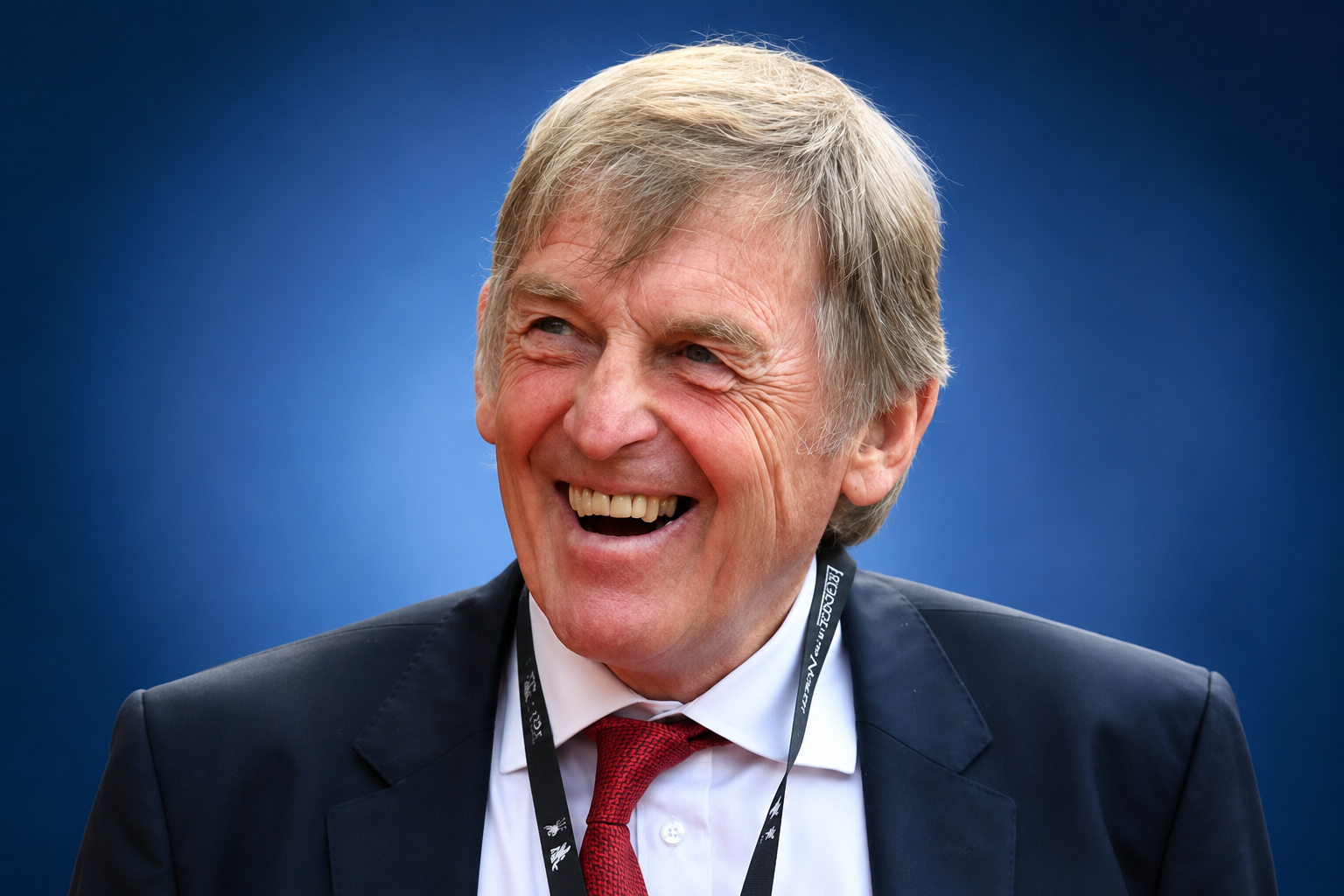
Search “Kenny Dalglish net worth” and you’ll get a shrug dressed up as a number. One site says £8m, the next says £30m, and none of them explain how a six-decade career at the top of British football could land anywhere in that gap. So we did the thing the AI-templated pages won’t: we built the figure from the ground up, era by era, and reconciled why the estimates disagree.
Kenny Dalglish Net Worth: The Quick Answer
Our working estimate for Kenny Dalglish’s net worth in 2026 is £15m–£20m (roughly $20m–$25m). That sits deliberately in the middle of the published range, and the reason for the range is the whole story.
Dalglish earned across an era that spanned pre-inflation 1970s wages, a record-breaking transfer, two title-winning management spells and, finally, a genuinely modern multi-million-pound manager’s contract in 2011. His money came in four buckets: playing wages, managerial salaries, ambassadorial and media income, and property. Estimates vary because most sites pick one bucket, guess, and stop.
Why the Estimates Range From £8m to £30m
Before the timeline, the honest caveat: Dalglish has never published his accounts, so every figure online — including ours — is an informed reconstruction, not a leaked statement. The wild spread exists for three reasons.
- Currency and date confusion. Sites mix dollars and pounds and quote figures from different years without saying so, so a $12m estimate and a £15m estimate get treated as contradictions when they’re roughly the same money.
- Career-length compounding. A player from the 1970s earned tiny sums by today’s standards, but a manager in 2011 earned modern money. Averaging across the whole career badly distorts the total.
- Gross vs net. Career earnings across 60 years are not the same as current net worth after decades of tax, spending and reinvestment. The headline-grabbing $30m figures usually describe lifetime gross income, not what’s in the bank.
Early Earnings: Celtic and the Path to Stardom
Dalglish came through at Celtic, signing professionally in 1971 and becoming the fulcrum of Jock Stein’s side. Wages in Scottish football then were a world away from now — a top Celtic player earned in the region of £200–£300 a week at his peak there, strong money for the early 1970s but a rounding error against a modern footballer’s daily rate.
Put in context: the average UK weekly wage in the mid-1970s was around £40–£50, so Dalglish was earning several times the national average. Comfortable, not wealthy. The point is that almost none of his eventual fortune was built in Glasgow — it was built by what came next.
The £440,000 Move to Liverpool: A British Record
In August 1977, Liverpool paid Celtic £440,000 for Dalglish — a British transfer record at the time, brought in to replace the Hamburg-bound Kevin Keegan. Adjusted for inflation, that fee is worth somewhere north of £3m in today’s money, though in football-market terms a comparable player now would cost tens of millions.
His playing wages at Anfield started around £1,000–£1,200 a week and rose steadily across his 13 years as a player, a period in which he arguably became the best British footballer of his generation. The trophy haul justified every penny: eight league titles, three European Cups and a barrowload of domestic cups across his playing and playing-manager years. On-pitch value like that is exactly what kept his wages climbing — but 1980s top-flight pay, pre-Premier League and pre-Sky, still tops out in the low thousands per week, not the hundreds of thousands.
For a sense of how differently modern careers pay, compare it to a player like Dele Alli, whose career earnings we’ve broken down here — a fraction of Dalglish’s honours, a multiple of his playing-era money.
Management Career and Salary: Two Spells at Liverpool
Management is where the picture splits into two very different financial eras.
First spell (1985–1991): glory, then Hillsborough
Appointed player-manager in 1985, Dalglish won three league titles and two FA Cups. His pay as a mid-1980s First Division manager would have been solid but modest by today’s standards — comfortably five figures a year rising into low six figures, nothing like a modern manager’s package.
Why did Kenny Dalglish resign from Liverpool in 1991?
This is the emotionally loaded question the template sites skip entirely. Dalglish resigned in February 1991, and it cannot be separated from the Hillsborough disaster of April 1989, in which 97 Liverpool supporters died. Dalglish led the club and the city through the aftermath — attending funerals, supporting bereaved families — and the toll was immense. He cited the unbearable pressure and stress as the reason for stepping away. It was a resignation driven by grief and burnout, not money or performance, and it’s central to why he’s revered on Merseyside.
Blackburn Rovers: a title on Jack Walker’s money
Bankrolled by owner Jack Walker, Dalglish took Blackburn from the second tier to the 1995 Premier League title. This is where he first earned genuinely modern wages, with a well-remunerated package befitting a manager delivering a title against the odds.
Second Liverpool spell (2011–2012) and the 2012 sacking
When Dalglish returned to Liverpool in January 2011, football economics had transformed. Reports put his salary at around £4m–£5m a year — more in a single season than he likely earned across his entire playing career. He won the 2012 League Cup, but a poor league finish and an FA Cup final defeat to Chelsea led the owners to act.
Was he sacked in 2012? Yes. Unlike 1991, this was a dismissal by the club’s ownership (Fenway Sports Group), not a resignation — an important distinction the two departures are often muddled into one.
Life After Management: Ambassadorial Roles and Business Interests
Since 2013, Dalglish has held a non-executive director and ambassadorial role at Liverpool FC, a paid position that keeps him tied to the club. Anfield’s main stand was renamed The Kenny Dalglish Stand in 2017, and he was knighted in 2018 — a Sir Kenny title that raises his commercial value on the speaking and appearance circuit even though it carries no salary itself.
Beyond the club, his wealth sits in property across Merseyside and the north-west, plus decades of endorsement and media income. He and his wife Marina founded the Marina Dalglish Appeal, which has raised millions for cancer care on Merseyside — charitable work that shapes public perception of his wealth even though it isn’t personal income. It’s a reminder that a footballer’s public “net worth” and their actual liquid fortune are rarely the same thing.
Kenny Dalglish Net Worth Timeline: Career Earnings at a Glance
| Era | Role | Approx. earnings level |
| 1971–1977 | Celtic player | ~£200–£300/week |
| 1977–1990 | Liverpool player | ~£1,000–£1,200/week, rising |
| 1985–1991 | Liverpool manager | Low six figures/year |
| 1991–1995 | Blackburn manager | Strong six figures/year |
| 2011–2012 | Liverpool manager | ~£4m–£5m/year |
| 2013–present | Ambassador & property | Paid director role + assets |
Stack those up and a £15m–£20m present-day net worth is the sensible landing spot. Figures near £8m ignore his second-spell salary and property; figures near £30m are quoting lifetime gross earnings, not current wealth.
How Kenny Dalglish Compares to Other Football Legends
Here’s the uncomfortable truth for a man many rate as Britain’s greatest-ever player: his fortune is modest next to average modern Premier League squad players. That isn’t a slight — it’s chronology. Dalglish’s peak came before the 1992 Premier League and the Sky TV money that multiplied wages tenfold. A journeyman today can out-earn a 1980s Ballon d’Or contender over a career.
It’s the same generational gap you see in music and entertainment, where the timing of a career matters as much as the talent — the way Roger Daltrey’s fortune leans on decades of touring and royalties rather than a single peak payday. Dalglish’s legend is priceless; his bank balance simply reflects the era he dominated.
The Bottom Line
Kenny Dalglish’s net worth in 2026 is best estimated at £15m–£20m, built from modest playing wages, two eras of management pay that couldn’t be more different, and a comfortable post-football portfolio of property and paid Liverpool roles. The huge published range isn’t a mystery — it’s just what happens when sites forget to separate 1970s money from 2011 money.
FAQs
What is Kenny Dalglish’s net worth in 2026?
Kenny Dalglish’s net worth in 2026 is estimated at around £15m–£20m (roughly $20m–$25m). He has never disclosed his finances, so every figure is an estimate built from his playing wages, manager salaries, ambassadorial income and property.
What was Kenny Dalglish’s salary as Liverpool manager?
In his second spell (2011–2012), reports put his salary at roughly £4m–£5m a year — more than he likely earned in his entire playing career. His first-spell pay in the 1980s was far lower, in the low six figures annually.
How much did Liverpool pay for Kenny Dalglish in 1977?
Liverpool paid Celtic £440,000 for Dalglish in August 1977, a British transfer record at the time. Adjusted for inflation that’s worth over £3m today, though a comparable player now would cost tens of millions.
Why did Kenny Dalglish resign from Liverpool in 1991?
He resigned in February 1991 citing unbearable stress, largely tied to leading the club and city through the aftermath of the 1989 Hillsborough disaster, in which 97 Liverpool fans died. It was driven by grief and burnout, not money or results.
Was Kenny Dalglish sacked in 2012?
Yes. Unlike his 1991 resignation, his 2012 exit was a dismissal by owners Fenway Sports Group after a poor league finish and an FA Cup final defeat to Chelsea, despite winning the League Cup that season.
How did Kenny Dalglish make his money after football?
Mainly through a paid non-executive director and ambassadorial role at Liverpool FC, property investments across Merseyside, plus endorsements and media appearances. His 2018 knighthood also boosts his value on the speaking circuit.