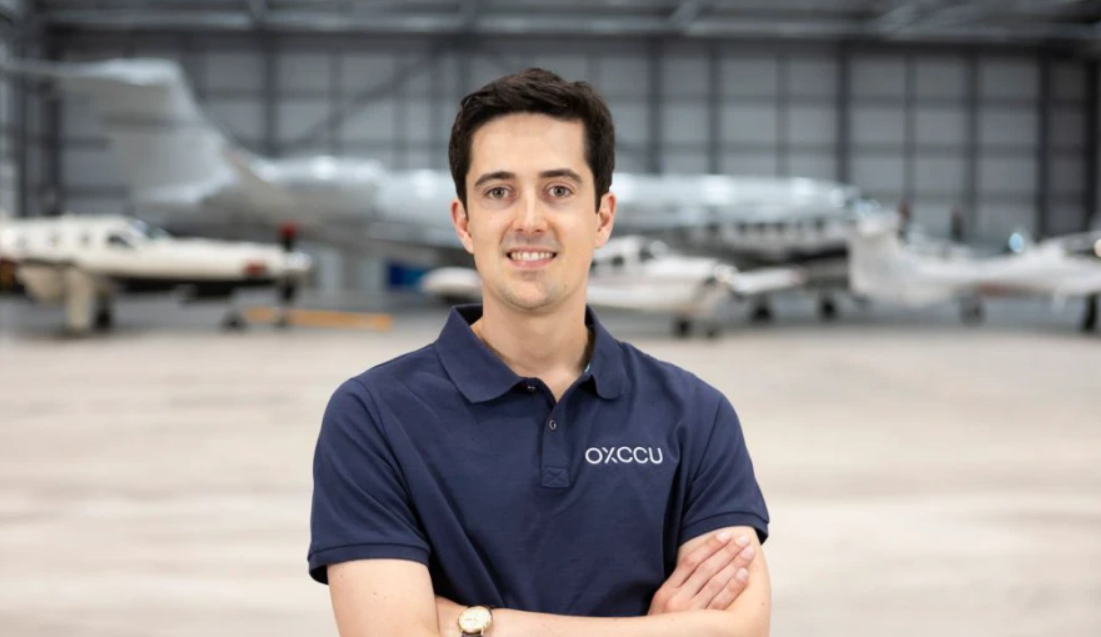



Procurement is not usually the first thing people call exciting. Most teams think of it as slow approvals, scattered supplier data, long email threads, and too many stakeholders pulling in different directions. Ben Freeman saw something else in that mess. He saw a business problem that almost every growing company was dealing with, and he also saw a gap in the software built to solve it.
That gap became Omnea.
As co-founder and CEO, Ben Freeman has helped turn Omnea into one of the more closely watched names in AI procurement. In a short stretch of time, the company has moved from a sharp founding idea to real traction with enterprise customers, major funding rounds, and a stronger position in the procurement and supplier management market.
Ben Freeman’s Background and the Problem He Chose to Solve
Before Omnea, Ben Freeman built his career in high-growth software. His time at Tessian gave him a front-row seat to how companies actually buy, approve, onboard, and manage suppliers. What should have been a clear process often felt messy from start to finish.
Requests moved slowly. Employees had little visibility into what was happening. Finance teams wanted better control over spend. Legal, IT, security, and procurement all had a role to play, but the process itself rarely felt connected.
That kind of friction is easy to overlook from the outside, but inside a company it adds up fast. Delayed approvals can hold back revenue, duplicate tools can waste budget, and weak supplier oversight can create compliance and third-party risk issues that are far more expensive later on.
Ben Freeman appears to have understood early that procurement was not just a back-office headache. It was a real operational challenge sitting at the center of how modern businesses buy, manage vendors, and control costs.
How Ben Freeman Co-Founded Omnea Around a Clear Market Need
Omnea was founded in 2022 by Ben Freeman and Ben Allen. The idea was straightforward, but the opportunity behind it was much bigger than it looked at first glance. Companies did not just need another procurement tool. They needed a better way to handle the entire flow of supplier requests, approvals, onboarding, risk checks, renewals, and vendor management.
That is where Omnea found its opening.
Instead of treating procurement as a disconnected series of forms, emails, and internal handoffs, Omnea focused on making the experience easier for everyone involved. The platform was built to act as a cleaner front door for procurement while also giving finance, legal, IT, security, and procurement teams better visibility behind the scenes.
That early positioning helped Omnea stand out. It was not trying to be just another workflow layer. It was aiming to become an AI-native procurement platform with stronger orchestration, supplier lifecycle management, and a single source of truth for supplier data.
What Omnea Does and Why the Market Paid Attention
Part of Omnea’s appeal comes from how simple the problem feels when you explain it in plain language. Employees need a way to ask for new tools, services, or suppliers without getting stuck in a maze. Procurement teams need structure. Finance wants spend visibility. Legal and security need governance. Leadership wants control without slowing the business down.
Omnea sits in the middle of that.
The platform is designed to streamline procurement intake, route requests through the right approval workflows, centralize supplier information, and help businesses manage the supplier lifecycle with more clarity. That matters because procurement rarely breaks down in one dramatic moment. It breaks down in dozens of small ways: unclear ownership, missing data, manual follow-ups, slow reviews, and poor coordination across teams.
Omnea’s product story became even stronger as the company leaned further into AI. Rather than using AI as a vague add-on, the business has framed it around practical use cases in procurement automation, supplier relationship management, and workflow efficiency. In a market full of broad software claims, that kind of focus helps.
The Growth Milestones That Put Ben Freeman and Omnea on the Map
A big reason people now pay attention to Ben Freeman and Omnea is that the growth story has real proof behind it.
Omnea raised a $20 million Series A in October 2024, then followed it with a $50 million Series B in September 2025, bringing total funding to more than $75 million. Those rounds did more than add capital. They signaled that well-known investors believed Omnea had the product vision and market traction to build something important.
The company’s customer momentum also gave the story more weight. Omnea has publicly highlighted enterprise customers including Spotify, Wise, MongoDB, and Adecco. Names like that matter because they show the platform is not only attractive in theory. It is being trusted by large businesses with complex procurement needs.
Growth has also shown up in other ways. The company has pointed to strong revenue momentum, team expansion, and deeper commercial progress across the UK, Europe, and North America. For a startup operating in a category that many people used to ignore, that kind of traction changes the conversation fast.
Why Ben Freeman’s Leadership Helped Omnea Stand Out
Strong startups usually do not rise on product alone. They rise because the leadership is clear about the problem, disciplined about execution, and credible with customers.
Ben Freeman’s public comments suggest a founder who spent serious time understanding customer pain before trying to scale the answer. That matters in a market like procurement software, where it is easy to build something that sounds impressive but does not fit how companies actually work.
Another part of the Omnea story is team quality. Freeman has spoken about talent density and careful hiring, which points to a company trying to build depth, not just speed. That kind of focus often shapes how a startup handles product decisions, customer relationships, and long-term growth.
There is also a bigger leadership thread running through the company’s story. Omnea is not only selling a tool. It is pushing the idea that procurement should be treated as a strategic function. That is a stronger message than simply promising automation. It connects the product to cost control, governance, supplier performance, risk management, and operational efficiency.
How Omnea Became a Rising Force in AI Procurement
Timing played a major role in Omnea’s rise, and Ben Freeman seems to have bet on the market at the right moment.
Businesses today are managing more software vendors, more outside services, and more internal pressure to justify spend. Finance leaders want tighter oversight. Legal and security teams want stronger controls. Employees want faster decisions. Procurement teams are expected to move quickly without losing governance.
That environment creates a natural opening for AI procurement software, procurement orchestration, and supplier management platforms that can bring order to the process.
Omnea’s position has benefited from this shift. It is not just talking about automation in the abstract. It is focused on real business needs such as procurement intake, approval routing, supplier onboarding, third-party risk management, vendor visibility, and supplier relationship management. That makes the company easier to understand and easier to remember.
The phrase rising force fits because Omnea has managed to combine several things that do not always come together at once: a clear market problem, a usable product story, enterprise customer traction, investor backing, and a category narrative tied to AI.
The Achievements That Define Ben Freeman’s Success With Omnea
Ben Freeman’s success with Omnea is best understood through a set of concrete achievements rather than vague startup hype.
One of the clearest is building a company that large enterprises are willing to trust. Winning customers such as Spotify, Wise, MongoDB, and Adecco says a lot about how the market views the platform.
Another is fundraising. Raising more than $75 million across seed, Series A, and Series B is not just a headline number. It reflects investor confidence in the company’s product-market fit, leadership team, and room for expansion.
Freeman has also helped position Omnea in a part of the market that feels especially relevant now. AI procurement is no longer a niche talking point. Businesses are actively looking for ways to automate workflows, improve supplier visibility, manage spend more carefully, and reduce process friction across departments. Omnea has put itself in the middle of that demand.
There is also a category-building angle to Freeman’s success. He did not build around a flashy consumer trend. He built around an overlooked enterprise problem and gave it a sharper, more modern identity. That is often where some of the strongest B2B companies come from.
Who Is the CEO of Omnea?
The CEO of Omnea is Ben Freeman. He is also the company’s co-founder and one of the main figures behind its product vision, growth strategy, and expansion in the AI procurement space.
Who Is Ben Freeman CEO?
Ben Freeman is the CEO and co-founder of Omnea, an AI-native procurement and supplier management company. He is best known for helping build the business into a fast-growing name in procurement orchestration, spend control, and supplier lifecycle management.
Who Owns Omnea?
Omnea was co-founded by Ben Freeman and Ben Allen. The company is backed by investors including Accel, First Round Capital, Point Nine, Insight Partners, Khosla Ventures, and Prosus. Publicly available information confirms the founders and funding partners, but it does not clearly disclose exact ownership percentages.
What Is Ben Freeman Known For?
Ben Freeman is known for co-founding and leading Omnea. He is closely associated with the company’s rise in AI procurement, its funding milestones, its enterprise customer growth, and its effort to make procurement simpler, faster, and more strategic for modern businesses.
Ben Freeman Omnea Net Worth
There is no widely verified public figure that clearly confirms Ben Freeman’s net worth. That is common with startup founders whose wealth is tied to private company ownership. What can be measured more reliably is Omnea’s business progress, including funding, customer traction, product expansion, and market recognition.
Entities, Semantic Terms, and NLP-Related Words for Ben Freeman and Omnea
To strengthen search relevance naturally, this topic connects with a cluster of entities and related language around procurement, enterprise software, startup growth, and supplier management.
Primary entities: Ben Freeman, Omnea, Ben Allen, Tessian, Accel, First Round Capital, Point Nine, Insight Partners, Khosla Ventures, Prosus, Spotify, Wise, MongoDB, Adecco.
Semantically related terms: AI procurement, procurement software, supplier management, supplier relationship management, SRM, procurement orchestration, procurement automation, intake management, spend control, supplier lifecycle, vendor management, third-party risk management, workflow automation, enterprise software, B2B SaaS, digital procurement, approval workflows, supplier onboarding, procurement operations, procurement strategy.
Contextual and NLP-related phrases: Ben Freeman Omnea, Omnea CEO Ben Freeman, Ben Freeman CEO of Omnea, Omnea founder Ben Freeman, Omnea success story, Omnea funding, Omnea Series A, Omnea Series B, Omnea enterprise customers, Omnea growth, AI-native procurement platform, supplier lifecycle management platform, procurement intake and orchestration, supplier data visibility, enterprise buying process, modern procurement transformation.
Why This Story Has Search Value
The topic works well for search because it brings together founder intent, company growth, funding, product positioning, and commercial traction. People searching for Ben Freeman and Omnea are often looking for more than a basic company bio. They want to understand who Ben Freeman is, what Omnea does, why the company is growing, who backs it, and what achievements make it worth paying attention to.
That is what gives this story staying power. It is not only about one founder or one funding round. It is about how a specific business problem turned into a company with real momentum in AI procurement.