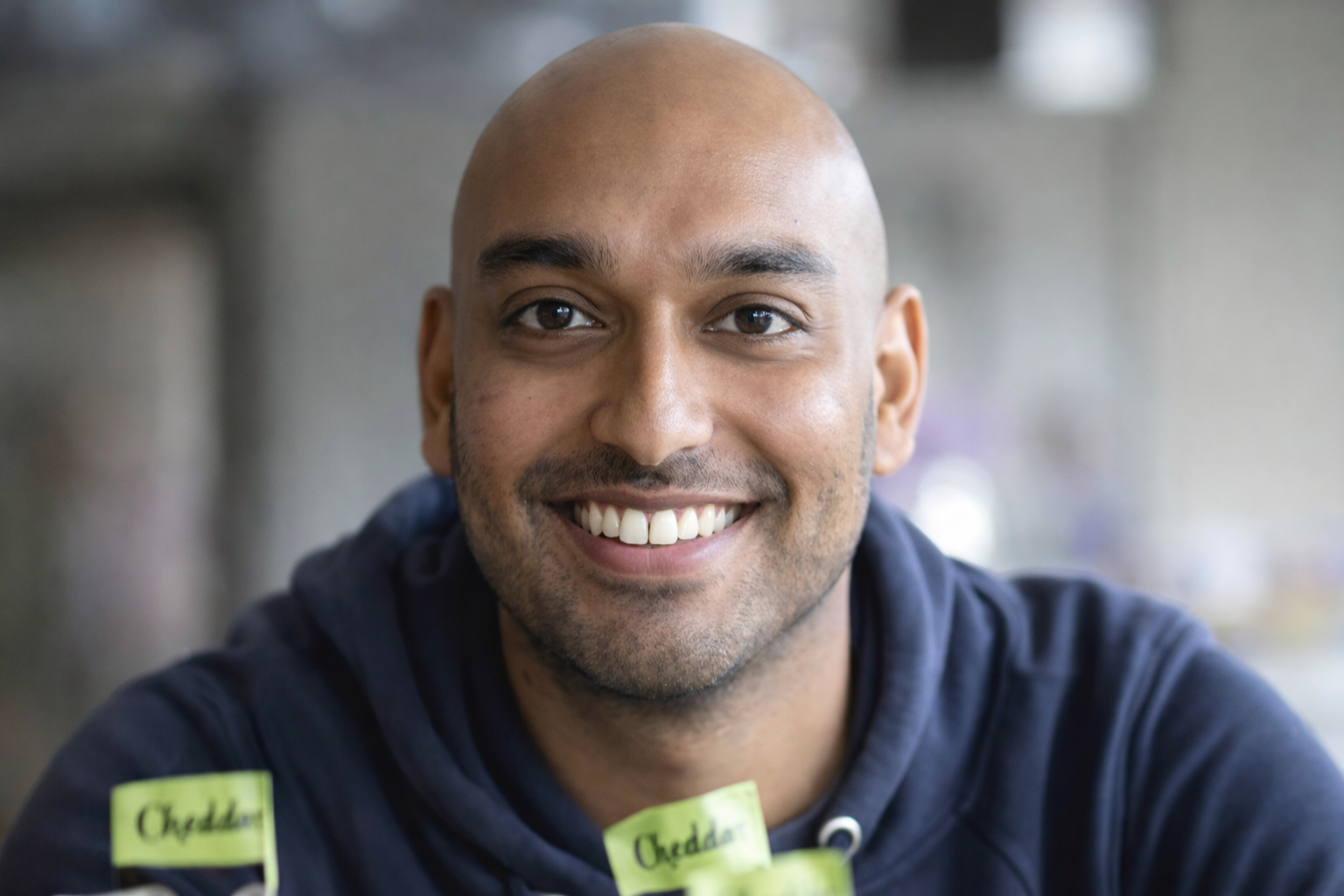
Building a food startup is hard. Building one in dairy is even harder.
Dairy is not a niche category people can casually disrupt with a clever label and a nice-looking package. It is one of the biggest, most established parts of the global food system. People know what milk, cheese, yogurt, and dairy-based nutrition products are supposed to taste like, feel like, and do. That creates a very different challenge for founders. It is not enough to offer a substitute that sounds better on paper. You have to offer something that gets much closer to the real thing.
That is what makes Jevan Nagarajah and Better Dairy such an interesting story.
Instead of building another brand around conventional plant-based dairy alternatives, Jevan Nagarajah chose a much more difficult path. Better Dairy set out to recreate the parts of dairy that actually matter most at a functional level, especially the proteins that give dairy its texture, structure, nutrition, and performance. That decision immediately pushed the company into a more technical, more ambitious, and far more demanding lane than most food startups choose.
Over time, that choice helped Better Dairy become one of the more closely watched names in animal-free dairy and food biotech. The company has attracted serious funding, built a science-led team in London, earned media attention, and developed a wider platform story that now goes beyond cheese and into nutrition. In a crowded alternative protein market, that is a meaningful achievement.
Why Jevan Nagarajah Saw a Bigger Opportunity in Dairy
Jevan Nagarajah did not build Better Dairy around a passing trend. The company was founded in 2020 with a view that dairy was both a huge market and a deeply flawed one.
That matters because many food startups start with a consumer trend first and a scientific edge second. Better Dairy was different from the start. The company was built around a harder question: what if you could make the key components of dairy without needing the cow at all?
That idea sounds simple when phrased like that, but the business logic behind it is much bigger. Dairy is everywhere. It sits inside everyday foods, premium foods, sports nutrition, infant formula, recovery products, and long-established global supply chains. It is also one of those categories where consumers rarely compromise for long. People may try alternatives, but they still care about melt, stretch, mouthfeel, nutrition, and familiarity.
Jevan Nagarajah seems to have understood early that this was exactly why dairy mattered. It was not an easy category, but that was the point. If Better Dairy could solve real problems inside dairy, it would be building something with much more depth than a surface-level food trend.
That is part of what gives the Better Dairy story weight. It was not built to chase a vegan headline. It was built to tackle a foundational part of food using biotechnology, precision fermentation, and a long-term product vision.
The Real Problem With Most Dairy Alternatives
One reason Better Dairy stands out is that it went after the technical gap most people in food already knew existed.
Plenty of dairy alternatives have improved over the years, but cheese remains one of the hardest categories to replicate well. A lot of products can look convincing on a shelf or work in a recipe if expectations are low. But when consumers want real cheese behavior, things get complicated very quickly.
That comes down in large part to proteins, especially casein.
Casein plays a central role in the way cheese behaves. It affects texture, melt, stretch, firmness, and structure. It helps explain why many plant-based cheeses still struggle to feel fully satisfying for people who are used to traditional dairy. They may check the lifestyle box, but they often do not match the eating experience.
Better Dairy chose to work on this harder layer of the problem. That decision says a lot about Jevan Nagarajah’s approach. Rather than staying in the safer zone of simple substitution, the company focused on the functional heart of dairy. That is a much more difficult technical challenge, but it is also where a real breakthrough can happen.
This is also where Better Dairy separated itself from standard plant-based positioning. It was not trying to make something that merely looked like dairy. It was trying to make dairy proteins and dairy functionality in a different way.
How Better Dairy Used Precision Fermentation to Stand Out
At the center of Better Dairy’s story is precision fermentation.
In plain terms, precision fermentation is a way of programming microorganisms to produce specific compounds. It has been used in other industries for years, and in food it opens the door to producing ingredients that would otherwise come from animals. For Better Dairy, this became the foundation of an animal-free dairy model.
The company’s early public story focused heavily on animal-free casein and hard cheese applications. That made strategic sense. Hard cheese is a category where the weaknesses of conventional alternatives are easy to spot, which means the upside of solving the problem is much clearer.
What made Better Dairy more compelling than a typical startup pitch was that it did not stop at a broad sustainability claim. It tied its story to product functionality. That is a stronger position because it connects the science to what consumers and manufacturers actually care about.
If a company can help unlock better melt, stretch, structure, and taste while lowering reliance on conventional dairy production, it has a more credible path to relevance. That is far more interesting than simply saying the future of food will be greener.
Jevan Nagarajah’s role here matters too. Founders in science-heavy sectors often need to do two jobs at once. They need to understand the technical ambition deeply enough to lead it, and they need to explain it clearly enough that investors, partners, and the wider market can care. Better Dairy’s rise suggests he has been able to do both.
Turning a Hard Science Story Into a Startup People Noticed
Deep science alone does not make a company stand out. Plenty of technically impressive startups never break through because the market cannot understand what they are doing or why it matters.
Better Dairy managed to avoid that trap.
The company built momentum by combining technical ambition with recognisable signals of progress. It raised significant early funding, including a Series A round in 2022, and grew into a London-based team of scientists, technologists, and operators working on a difficult category. That kind of backing does not prove product-market fit on its own, but it does show that credible investors saw something substantial in the company’s platform.
The business also gained visibility through broader startup and media recognition. Better Dairy has appeared in major media coverage and earned a place among the UK’s standout young businesses, including top-level recognition in the Startups 100 rankings. That matters because food tech can sometimes disappear into specialist conversations. Better Dairy managed to push into a wider business conversation as well.
This is where the success angle around Jevan Nagarajah and Better Dairy becomes clearer.
Success in a company like this is not just about having products on supermarket shelves right away. It is about building technical credibility, attracting capital, proving scientific progress, earning outside recognition, and staying relevant as the market shifts. By that standard, Better Dairy has already achieved something important. It has become a company people watch.
How Better Dairy Moved Beyond Animal-Free Cheese Ambitions
One of the most interesting parts of the Better Dairy story is that it did not remain frozen around one headline.
A weaker startup might have kept repeating the same message for years: animal-free cheese, animal-free cheese, animal-free cheese. Better Dairy’s public positioning has become broader and more sophisticated.
Today, the company talks not only about dairy alternatives, but about unlocking the full potential of milk. That is a bigger and more strategic framing. It moves the conversation from replacement toward improvement.
A major example of that shift is osteopontin. Better Dairy now highlights osteopontin as a bioactive milk protein with potential across infant nutrition, adult nutrition, and personal care. That changes the narrative in an important way. It suggests the company is not only interested in recreating dairy as it exists today, but also in addressing nutritional gaps and building new ingredient opportunities that conventional dairy systems do not serve especially well.
This broader focus makes Better Dairy more than a cheese startup. It becomes a precision fermentation company working at the intersection of dairy proteins, food science, human nutrition, and biotechnology.
That evolution feels especially smart because it shows platform thinking. The casein work still matters. In many ways, it laid the groundwork for the company’s broader scientific capability. But by moving into higher-value bioactive proteins as well, Better Dairy gives itself more than one route to relevance.
That is often what separates interesting startups from durable ones. Durable companies rarely rely on a single headline. They build a platform, learn from one product track, and use that knowledge to unlock another.
Why Jevan Nagarajah and Better Dairy Stand Out in Food Tech
The food tech world is full of bold claims. That is one reason Better Dairy’s story is worth looking at more closely.
The company stands out because its ambition is tied to specific, difficult, and meaningful problems. It is working on dairy proteins, casein, bioidentical ingredients, yeast-based production, precision fermentation, and functional nutrition. Those are not vague buzzwords when they are attached to real technical hurdles.
There is also something important about the timing. The wider alternative protein conversation has matured. Investors, partners, and consumers are no longer impressed by novelty alone. They want to know whether the science works, whether the cost curve can improve, whether the product actually performs, and whether the market case is strong enough to justify the effort.
Better Dairy feels more aligned with that more mature phase of the market.
Instead of selling a simple anti-dairy message, the company is building a deeper case around smarter dairy systems, scalable protein production, improved nutrition, and a more targeted use of biotechnology. That gives it stronger positioning in conversations around sustainable food innovation, next-generation dairy, and the future of milk proteins.
Jevan Nagarajah’s leadership is central to that. Founder-led companies often take on the tone and ambition of the person behind them. In Better Dairy’s case, the company appears to reflect a willingness to go after difficult problems, stay patient with science, and keep refining the story as the business evolves.
What the Better Dairy Story Says About the Future of Dairy
The most compelling part of this story is not that Better Dairy promises to replace every dairy product tomorrow. It is that the company shows how the future of dairy may become more layered than people once assumed.
For years, the public conversation was often framed as traditional dairy versus plant-based dairy. Better Dairy points toward a third path, one built around animal-free dairy proteins, synthetic biology, fermentation platforms, and targeted nutritional functionality.
That matters because consumers do not all want the same thing. Some care most about sustainability. Others care about taste and texture. Others care about protein quality, gut health, recovery, immune support, or infant development. A company that can operate across several of those conversations at once has a much stronger long-term position.
Better Dairy is still building, but that does not make the success story any less real. In many ways, it makes it more interesting. The company has already done the hard early work of becoming credible in a highly technical category. It has built attention in food biotech, attracted funding, evolved its scientific platform, and positioned itself around a bigger opportunity than a single product label.
That is why Jevan Nagarajah and Better Dairy deserve attention. They are not just part of the animal-free dairy trend. They are helping define what a more advanced, more functional, and more science-driven dairy future could look like.