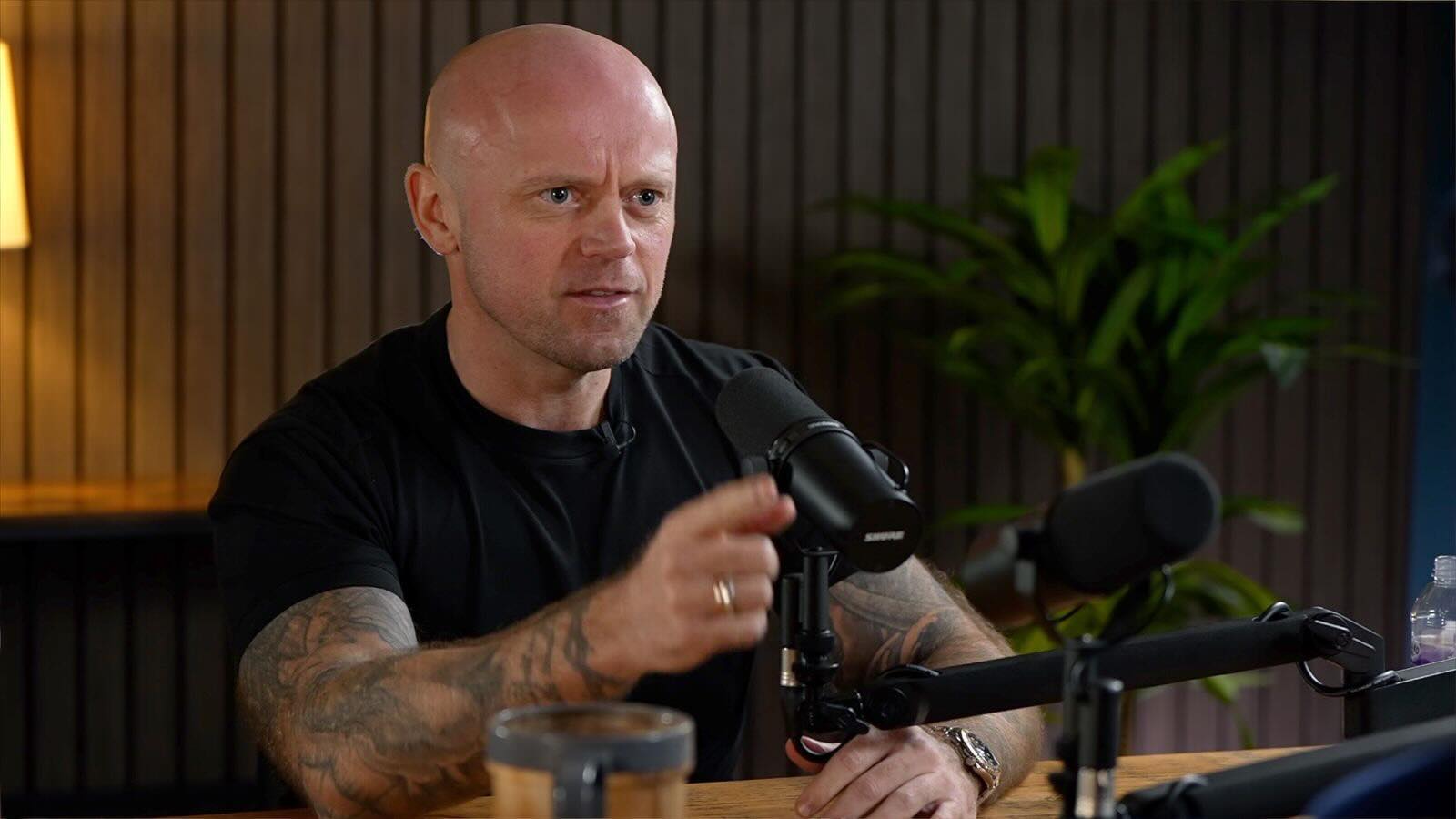





James English might not yet be a household name across the whole of the UK, but in Scotland and among fans of true crime, gangland interviews, and raw conversational content, he is a bona fide phenomenon. His Anything Goes podcast has attracted millions of listeners and spawned some of the most viewed interview content on YouTube in the UK. He’s spoken to gangsters, celebrities, convicted killers, and cultural figures — and in doing so, he’s quietly built a media empire and a very substantial personal fortune. So how much is James English actually worth?
What Is James English’s Net Worth?
James English’s net worth is estimated to be in the region of £2 to £5 million, though some assessments place it higher given the rapid growth of his business interests over the past few years. His wealth comes primarily from his podcast and YouTube channel, brand partnerships and sponsorships, live shows, merchandise, and a growing range of entrepreneurial ventures that have diversified his income well beyond the podcast itself.
It’s worth noting that for a creator of English’s type — digital-native, with income spread across multiple platforms and deal structures — precise net worth figures are genuinely difficult to establish. Much of his revenue flows through his own company structures, and the valuation of his audience and brand as ongoing assets is inherently speculative. What is clear is that he has built a commercially significant media business from essentially nothing in a remarkably short period of time.
From Glasgow to Podcast Stardom
James English grew up in Glasgow and, by his own account, had a turbulent early life. He’s spoken openly in interviews about being involved in street culture and facing challenges that many of his later interview subjects would recognise. This background is central to his credibility with the audience he’s built — he isn’t a media-trained presenter asking questions from behind glass. He’s someone with lived experience interviewing people from worlds he at least partially understands.
He started the Anything Goes with James English podcast in the early 2020s, initially building his audience through YouTube. His interview style — direct, unafraid, relaxed but purposeful — proved immediately engaging. Early episodes featuring Scottish gangsters and figures from the Glasgow criminal underworld attracted significant attention, and his subscriber count grew rapidly.
YouTube Income and Platform Revenue
The Anything Goes YouTube channel has accumulated hundreds of millions of views, with individual videos regularly reaching millions of views each. At the monetisation rates YouTube applies to content of this type — which can vary between £1 and £5 per 1,000 views depending on the audience demographic and advertiser demand — the channel generates substantial passive income from advertising alone.
At several hundred million total views and counting, even conservative estimates of average monetisation suggest YouTube ad revenue in the hundreds of thousands of pounds annually. More popular videos in his catalogue — interviews that have gone viral or been widely shared — would generate disproportionate revenue through the YouTube Partner Programme.
Beyond raw advertising revenue, YouTube provides English with a distribution platform for sponsorship content. When a sponsor pays for a mid-roll or pre-roll mention in a video with millions of views, the rates are considerably higher than standard CPM advertising. Creators with English’s audience size and engagement levels can command £5,000 to £20,000 or more per sponsorship integration, depending on the brand and the deal structure.
Podcast Monetisation and Sponsorship
The audio podcast version of Anything Goes adds another layer of income. Podcast advertising is priced differently to YouTube — typically on a cost-per-thousand-listeners basis, with rates for targeted shows running £20 to £50 per thousand listeners for host-read ads. A podcast with hundreds of thousands of regular listeners generating multiple episodes per week can command advertising rates that make the podcast income alone a significant revenue stream.
English has also sold dedicated podcast sponsorship packages to brands looking to reach his demographic — typically young to middle-aged men with an interest in true crime, gangland culture, celebrity interviews, and authentic Scottish content. This is an attractive demographic for brands in categories including sports betting, financial services, food and drink, and clothing.
Live Shows and Events
One of the clearest indicators of English’s commercial success is his ability to sell out live shows. He has taken Anything Goes on the road for live interview events at theatres and larger venues, selling tickets to audiences who want to see the podcast experience in person. Live shows in the UK podcasting space can be extremely lucrative for creators with loyal audiences — ticket prices typically run £30 to £60, and theatre-sized venues holding 500 to 2,000 people can generate gross revenue of £15,000 to £120,000 per show before costs.
English has performed live shows at multiple venues across Scotland and the UK, and as his national profile grows, the scale and ambition of these live events is likely to increase. The transition from regional podcast phenomenon to national live event draw is one that mirrors the path taken by other successful UK podcasters.
High-Profile Interviews and Their Commercial Value
The interview subjects English has attracted reflect his growing stature in UK media. He has spoken with major figures from the world of boxing, music, football, crime, and entertainment. Each high-profile interview drives views, grows the subscriber base, and increases the commercial value of the channel and podcast. The flywheel effect of compelling interview content is particularly powerful in the digital age: one viral video can add tens or hundreds of thousands of new subscribers, who then consume the entire back catalogue and become regular listeners.
His interview with Paul Ferris — the notorious Scottish gangster — is one example of the kind of content that drove his early growth. Subsequent interviews with figures from UK boxing culture, football, and the wider entertainment world have broadened his appeal beyond the true crime niche into more mainstream territory.
Business Ventures and Brand Partnerships
Beyond the podcast, English has invested in and promoted various business ventures. He has an active merchandise operation selling branded clothing and accessories to his fanbase, a revenue stream that can be surprisingly significant for creators with highly engaged audiences. He has also been involved in promotional activities and partnerships that extend his commercial presence beyond the media space.
His growing profile has attracted interest from investors and business partners wanting to align with his brand, and he has been characteristically entrepreneurial in pursuing these opportunities. The Scottish podcasting and content creation scene is significantly smaller than its London equivalent, which means English’s position as its dominant figure gives him a degree of local market power that amplifies his commercial opportunities.
Social Media Following and Influencer Value
English has substantial followings across Instagram, TikTok, and other social platforms, in addition to his YouTube presence. These followings represent commercial value in their own right — brands will pay for access to his audience across platforms, and the combined reach across all channels makes him a genuinely significant influencer by any UK standard.
As social media monetisation continues to evolve — with platforms introducing creator funds, paid subscriptions, and direct tipping — English is well-positioned to capture additional revenue from his existing audience base without needing to grow further. The depth of engagement from his existing fanbase is arguably more commercially valuable than raw follower numbers from a less engaged audience.
James English’s story is a genuinely modern one: a man who turned authenticity, a compelling story, and an understanding of what his audience wanted into a multi-million pound media business, largely through digital platforms that didn’t exist fifteen years ago. His net worth will continue to grow as long as he keeps creating content his audience is passionate about — and on that front, there’s no sign of him slowing down.
Comparison with Other UK Podcast Creators
To contextualise English’s financial position, it helps to compare him to other successful UK podcast creators. Steven Bartlett — founder of Social Chain and host of Diary of a CEO — is widely cited as one of the UK’s wealthiest podcast figures, with a net worth estimated in the tens of millions partly on the back of his podcast’s commercial success. Shagged Married Annoyed, No Such Thing as a Fish, and other successful UK podcasts have similarly generated their creators meaningful income, though few have achieved the same combination of YouTube scale and podcast listenership that English commands in his niche.
English’s advantage is his specificity. He occupies a clearly defined space in the UK podcast landscape — Scottish gangland and street culture, celebrity interviews with a raw edge, content that feels genuinely unfiltered — that no other major creator occupies as effectively. This specificity creates a defensible commercial position: his audience is highly loyal precisely because the content feels authentic and unreplicable. Advertisers pay premiums to reach niche audiences with high engagement, knowing that the targeting efficiency is better than broader, more diffuse channels.
Scaling the Business: What Comes Next
The next phase of James English’s financial growth is likely to come from one or more of several directions. A television deal — adapting his interview format for a traditional broadcast audience — would significantly expand his reach and income. Book deals, commissioned documentaries, and branded content productions are all natural extensions of his existing brand. The true crime and gangland genre has proven commercially robust across multiple formats, and English’s access to subjects and his authentic personal background give him genuine competitive advantages in this space.
International expansion is another possibility. While his content is rooted in a specifically Scottish and British context, the interest in organised crime, street culture, and celebrity conversations transcends national borders. American and Australian audiences, in particular, have shown appetite for British true crime content, and a deliberate expansion strategy into these markets could substantially grow his viewer and listener numbers — and therefore his advertising and sponsorship income.
The Authenticity Premium in Digital Media
Perhaps the most enduring asset in James English’s commercial portfolio is something that can’t be easily manufactured or replicated: authenticity. In an era when media consumers have become extraordinarily sophisticated at detecting performative or manufactured content, creators who come across as genuinely themselves build audiences with a depth of loyalty that translates into sustainable commercial value. English’s story — his background, his accent, his access, his manner — feels real because it is real, and that authenticity is the core of everything he has built commercially.
Digital media empires built on authentic personal brands have proven remarkably durable. They are hard to displace, resistant to competition, and capable of evolving into new formats and revenue streams without losing the essential quality that made them valuable in the first place. For James English, that represents not just current wealth but a platform for continued financial growth in whatever direction he chooses to take it.