
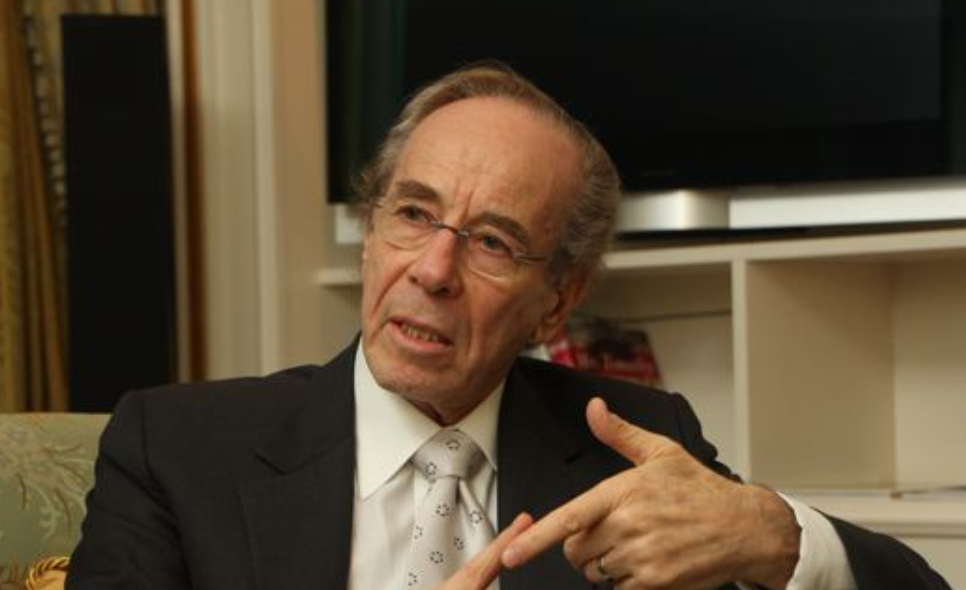
When we talk about the world’s great hoteliers, the name Isadore Sharp belongs near the top of any list. As the founder of the Four Seasons Hotels and Resorts — arguably the most celebrated luxury hotel brand in the world — Sharp transformed the hospitality industry and built an extraordinary personal fortune in the process. But just how wealthy is the man behind one of the most recognisable brands in global travel?
What Is Isadore Sharp’s Net Worth?
Isadore Sharp’s net worth is estimated at approximately $2.5 to $3 billion, though some estimates have placed it higher in peak years. His wealth derives primarily from his founding stake in Four Seasons Hotels and Resorts, now one of the most valuable hotel brands on the planet. Though he has divested portions of his holdings over the years — including a landmark deal with Bill Gates and Saudi Prince Alwaleed bin Talal — he retains significant equity and has accumulated substantial wealth from decades of profit distributions and sale proceeds.
Sharp’s story is particularly interesting because he didn’t inherit his fortune or stumble into it through fortunate timing. He built it brick by brick, room by room, over a career spanning more than six decades in the hotel industry.
Early Life and the Making of an Entrepreneur
Isadore Sharp was born in Toronto, Canada, in 1931, the son of a Polish-Jewish immigrant father who worked as a plasterer and small construction contractor. Growing up in modest circumstances, Sharp showed an early aptitude for construction and design, eventually studying architecture at the Ryerson Institute of Technology (now Toronto Metropolitan University). His father’s small building business gave him practical grounding in the construction trade that would prove invaluable.
He built his first hotel in 1961 — the Four Seasons Motor Hotel in Toronto — in partnership with his father and brother-in-law. It was a modest 125-room property, far removed from the luxury flagship properties the brand would eventually become known for. But it was a start, and Sharp’s instinct for quality and service was evident from the beginning.
Building the Four Seasons Brand
The Four Seasons brand grew steadily through the 1960s and 1970s, but the transformative moment came when Sharp articulated a clear vision for what the brand would represent: not the largest hotel in a city, but the finest. He made the deliberate decision to position Four Seasons as the gold standard of luxury accommodation, targeting wealthy travellers who valued personalised service, exceptional design, and consistent quality across every property worldwide.
This was a genuinely novel approach at the time. Most hotel chains competed on scale and price. Sharp competed on quality alone. He introduced innovations that are now standard in luxury hotels — 24-hour room service, twice-daily housekeeping, same-day laundry — but were revolutionary when first implemented. The emphasis on service as the core product, rather than the physical building, was a philosophical shift that transformed the industry.
Four Seasons went public in 1969, raising capital that allowed for further expansion. Through the 1980s and 1990s, the brand expanded rapidly into markets across North America, Europe, Asia, and the Middle East. Each property became a flagship of luxury in its city — the Four Seasons in Milan, London, Paris, New York, and Tokyo are among the most prestigious addresses in hospitality.
The Bill Gates Deal: Crystallising the Fortune
One of the most significant financial events in Sharp’s career came in 1997, when Bill Gates’ private investment firm, Cascade Investment, purchased a substantial stake in Four Seasons. Gates became the single largest shareholder in the company, holding around 47% at various points. Saudi Prince Alwaleed bin Talal also built a significant stake. Sharp retained a meaningful equity position while benefiting from the capital and credibility that came with such high-profile investors.
In 2006, Four Seasons was taken private in a deal valued at approximately $3.8 billion. Sharp, Gates, and Prince Alwaleed collectively led the buyout. For Sharp, this transaction crystallised a substantial portion of his wealth in cash, while also maintaining his ongoing equity in the private company. The buyout valued the company at a level that confirmed what the hospitality industry had long suspected: Four Seasons was not just a successful hotel chain but one of the most valuable brand assets in global business.
Four Seasons Today: A Staggering Valuation
Four Seasons Hotels and Resorts now operates more than 120 properties in over 45 countries, with a development pipeline that continues to grow. The brand is active in every major luxury market on earth, from urban business centres to tropical island resorts. Revenue across the portfolio runs into the billions annually.
In recent years, the private company has explored partial public offerings and further capital raises, with valuations suggested to be in the range of $10 billion or more for the overall business. Sharp’s precise remaining stake is not publicly disclosed, but even a small percentage of a $10 billion valuation represents hundreds of millions of dollars in equity.
The brand’s management model — Four Seasons typically manages properties rather than owning them outright, earning management fees from property owners — provides a highly capital-efficient business structure. This means the earnings quality is excellent: high margins, low capital intensity, and recurring fee income that flows regardless of whether individual properties are owned or not.
Philanthropy and the Terry Fox Legacy
Isadore Sharp is perhaps as well known in Canada for his relationship with Terry Fox as he is for his business achievements. Fox, the young Canadian athlete who attempted to run across Canada on a prosthetic leg to raise money for cancer research after losing his own leg to the disease, died in 1981 before completing his Marathon of Hope. Sharp, deeply moved by Fox’s story, became one of the founding supporters of the Terry Fox Foundation and has been central to its work for more than four decades.
He pledged that Four Seasons would make annual donations to the foundation in Fox’s name — a commitment that has resulted in tens of millions of dollars flowing to cancer research over the decades. This philanthropic commitment is a central part of Sharp’s personal identity and legacy, and he has written about it movingly in his memoir, Four Seasons: The Story of a Business Philosophy.
Recognition, Legacy and Ongoing Influence
Isadore Sharp has been recognised with numerous awards and honours throughout his career. He received the Order of Canada — the country’s highest civilian honour — in 2003. He has received honorary degrees from multiple universities and is widely cited in business schools as an exemplar of brand building and customer-centric thinking.
His memoir is taught in hospitality management programmes and business schools, not merely as an account of building a successful company but as a meditation on the philosophy of service, quality, and leadership. The principles he articulated — that quality service is not a cost but an investment, that treating employees well leads directly to better guest experiences — have influenced the entire hospitality industry.
Now in his nineties, Sharp remains connected to Four Seasons through an advisory and symbolic role. His son Greg Sharp has taken on a more active operational role in the family’s involvement with the business. The dynasty he created is firmly established, and the wealth it has generated — both for Sharp personally and for the thousands of employees and investors who have participated in the Four Seasons story — represents one of the great entrepreneurial success stories of the twentieth and twenty-first centuries.
What Sharp’s Story Tells Us About Building Lasting Wealth
There are useful lessons in Isadore Sharp’s financial journey that go beyond the specifics of his balance sheet. He built his fortune not through financial engineering or lucky timing but through a genuine commitment to a clear idea: that the finest hotel experience in the world was worth creating, and that customers would pay premium prices for something genuinely premium.
His willingness to reinvest profits, expand carefully rather than recklessly, maintain quality over volume, and attract world-class partners rather than dilute his vision for short-term gain are all hallmarks of enduring business success. The result is a net worth that reflects decades of compounding value creation — the hotel industry equivalent of a blue-chip investment held for a lifetime.
Sharp’s legacy in Canadian business and global hospitality is secure. His net worth is the financial expression of that legacy — substantial, well-earned, and built on something real.
The Four Seasons Experience and Why Guests Pay Premium Prices
Understanding why Four Seasons commands the prices it does — and why this has translated into such extraordinary wealth for Sharp — requires understanding the underlying product. At its best, the Four Seasons experience is genuinely unlike other luxury hotels. The staff-to-guest ratio is exceptionally high, training is intensive, and the culture of anticipatory service — where staff address guests by name, remember preferences from previous stays, and respond to unstated needs before they become requests — creates an experience that loyal guests will pay considerable premiums to replicate.
This creates what economists call pricing power: the ability to charge substantially more than competitors because customers genuinely value the product and have few substitutes that satisfy their requirements equally well. Hotels without this brand equity compete on price; Four Seasons competes on experience. The financial difference between those two positions, sustained over decades, is the difference between a good business and a great one — and ultimately between comfortable success and extraordinary wealth for its founder.
The Management Fee Model: Elegant and Profitable
Sharp’s insight about the management fee model deserves more attention than it typically receives in accounts of his success. By positioning Four Seasons as a management company rather than an owner-operator, he created a structure where the brand captures the upside of luxury hospitality — the premium fees, the brand cachet, the loyal customer relationships — while the capital risk of actually owning the physical buildings sits with the property investors who pay for the right to put the Four Seasons name on their hotel.
This means Four Seasons collects management fees on hundreds of millions of dollars of revenue without the capital requirements or balance sheet risk of owning those assets. It is, in structural terms, one of the more capital-efficient business models in any service industry — more akin to a luxury franchise than a traditional hotel company. The financial genius of this structure, consistently executed over decades, is a major reason why Sharp’s personal wealth has grown so dramatically.
Mentorship, Culture, and the Human Capital Legacy
Beyond the financial metrics, Sharp has created something at Four Seasons that has genuine long-term commercial value: a culture. The service culture he instilled — built around the Golden Rule, treating people as you would wish to be treated yourself — has proven remarkably durable across decades of expansion and leadership transition. Companies with strong cultures consistently outperform their competitors across measurable business metrics, and Four Seasons’ enduring position at the top of the luxury hospitality rankings reflects this cultural advantage.
Sharp has mentored generations of hospitality professionals who carry his service philosophy with them throughout their careers, extending his influence throughout the industry in ways that are hard to quantify but real in their commercial effects. This human capital legacy, while not appearing on any balance sheet, is part of what makes the Four Seasons brand so defensible — and therefore so valuable.