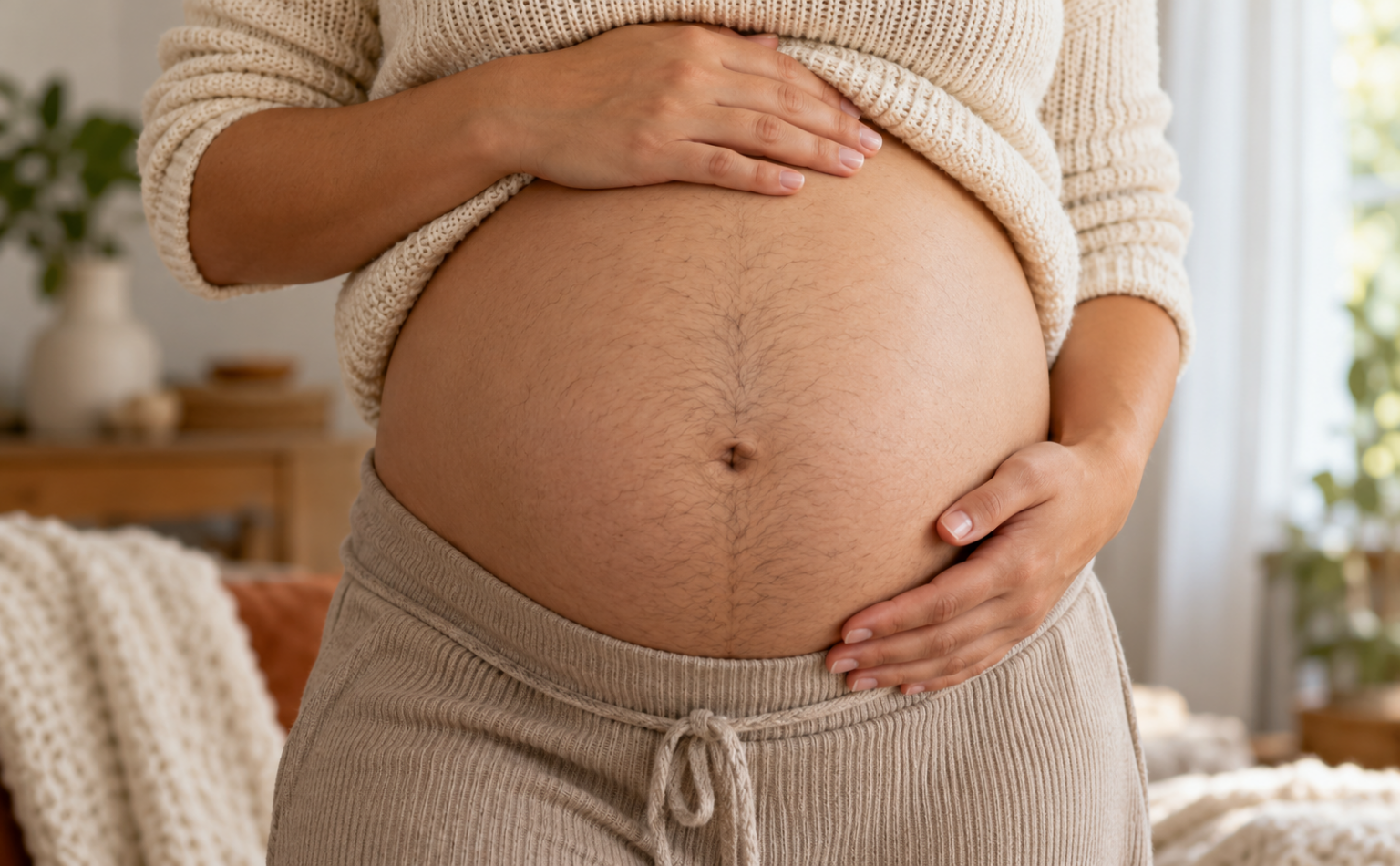
“Belly hair” isn’t a person. It’s a common pregnancy symptom. Many people find that during pregnancy the fine, pale hair on their tummy turns darker, thicker or more noticeable. It is usually harmless, it usually goes after the birth, and it says nothing about your baby’s health.
Only one named person appears in this article: TV presenter Stacey Solomon, who chose to post about her own hairy bump. Everything we say about her comes from what she shared herself or from mainstream coverage of those posts. We have not added anything else.
Last reviewed: 16 October 2026. This is general information, not medical advice. If something about your body worries you during pregnancy, speak to your midwife or GP.
What has been publicly confirmed
Two moments explain most of the searches for this keyword:
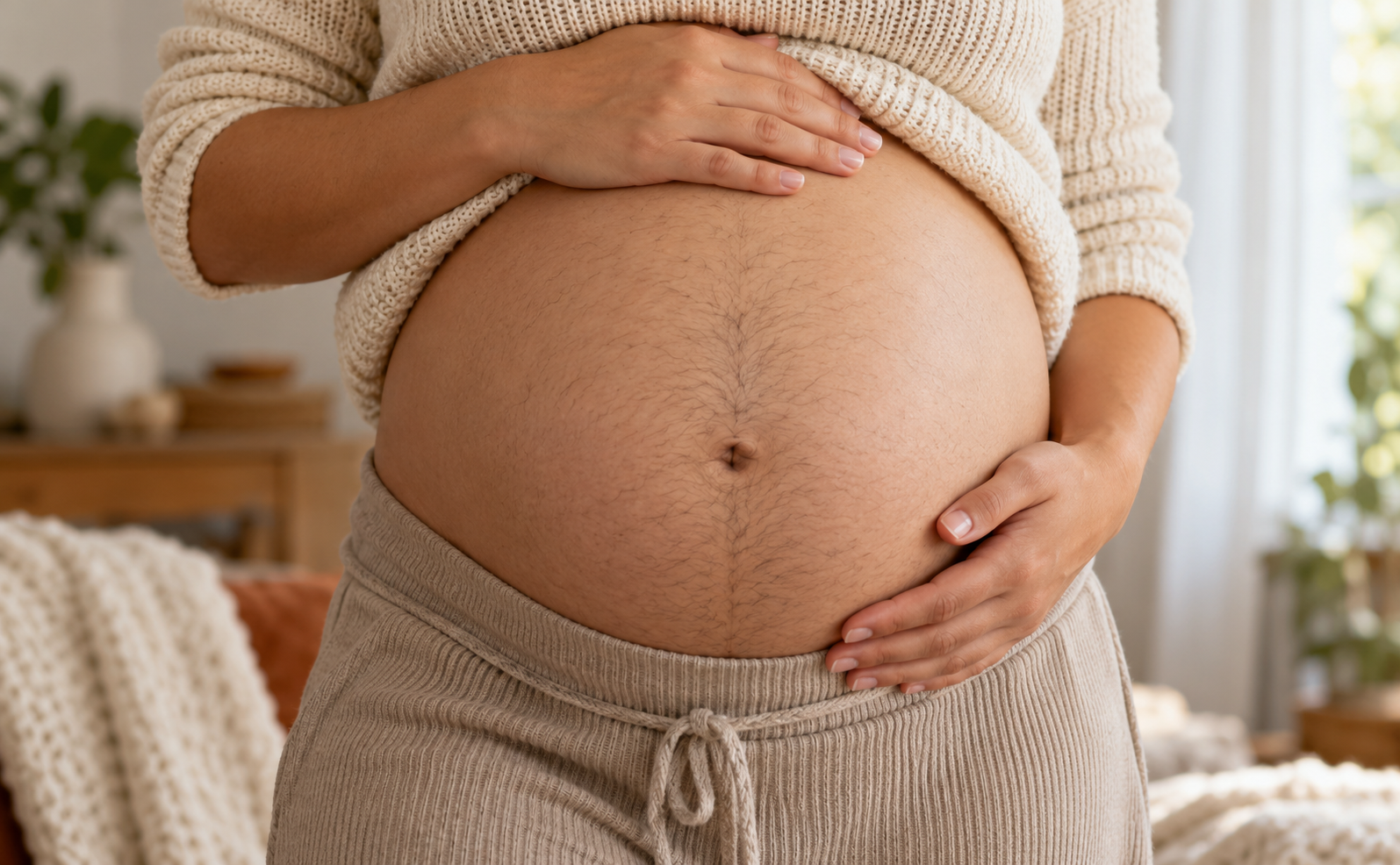
- April 2019: While pregnant, Stacey Solomon posted a candid Instagram photo showing dark hair across her bump. She joked that it looked as if she was carrying a Furby and asked other mums whether they had noticed the same thing. Heart and Hello! both reported it.
- 2021: After a social media user mocked her “hairy” bump, she replied with a body-positive message. She said she loved her body as it was, including its furriness, stretch marks and caesarean scar (Heart).
She has never shared any medical information about it beyond those posts, and we don’t guess at any. What the posts showed is something midwives see all the time: a normal body going through pregnancy.
Why belly hair appears in pregnancy
The cause is hormones. Pregnancy raises oestrogen and changes androgen levels, which affects how hair grows. Two things tend to happen:
- Vellus hair changes. The fine, almost invisible hair on your stomach can grow darker and coarser, so it is far easier to see on a stretched bump.
- The growth cycle shifts. More hairs stay in the growing phase and fewer fall out. That is the same reason many people find the hair on their head feels thicker in pregnancy.
Most people notice it during the second trimester. It can also show up on the face, arms, legs, breasts and back. The dark line down the middle of the bump (the linea nigra) often appears around the same time, which makes the area look more pronounced.
A hairy stomach while pregnant is a cosmetic change. It does not mean anything is wrong with you or your baby.
Announcement timeline
| Date | What happened | Source |
|---|---|---|
| April 2019 | Stacey Solomon posts a photo of her hairy bump and makes the “Furby” joke | Her Instagram, reported by Heart and Hello! |
| May 2019 | She publicly announces the birth of her son | Her own social channels |
| 2021 | She replies to an online troll about her bump hair | Heart |
A note on accuracy: Coverage does not agree on which pregnancy the 2021 exchange related to. Some articles connect it to a current pregnancy, and others suggest the troll was commenting on older photos. We have not settled that question because it can only be confirmed from her original posts. Treat any firm claim about it with caution.
Hairy belly and baby’s sex: fact or myth?
The idea that a hairy belly means a boy is an old wives’ tale. Our understanding is that no research links bump hair to the baby’s sex. The hair changes come from your hormones, and they happen whether you are carrying a boy or a girl.
Only your NHS anomaly scan (usually around 18 to 21 weeks, if the sonographer can see and you ask) or a blood test can tell you the sex. Bump hair, bump shape and cravings cannot.
Does a hairy belly go away after pregnancy?
Usually, yes. Once hormone levels settle after the birth, the extra hair normally sheds. According to the Healthline summary, which draws on guidance from the American College of Obstetricians and Gynecologists (ACOG), this typically happens within about six months of delivery.
There are a few practical points worth knowing:
- The shedding is gradual. You may not notice a change for the first few weeks.
- It often happens at the same time as postpartum hair loss from your scalp, around three to four months after the birth. That is a normal reset, too.
- Breastfeeding and individual hormone patterns can change the timing.
If the hair is still clearly there well beyond six months, or is getting worse rather than fading, mention it to your GP.
Removing or leaving belly hair: what is safe
You don’t have to remove it. Leaving it alone is completely fine, and it will most likely go by itself. If you would rather remove it, here are the trade-offs:
| Method | Pros | Watch out for |
|---|---|---|
| Trimming | Lowest risk, no stubble rash | Hair stays visible, just shorter |
| Shaving | Quick and cheap | Itchy regrowth on stretched skin; hard to reach and see later in pregnancy; nicks |
| Waxing | Lasts weeks | Skin is often more sensitive and painful in pregnancy; avoid broken or irritated skin; tell your therapist you are pregnant |
| Hair-removal creams | Painless | Strong chemicals and smell; patch test first, since skin can react differently in pregnancy; follow the label exactly |
| Laser / electrolysis | Long-term reduction | Generally postponed until after pregnancy because of limited safety data |
In practice, people often find a growing bump makes shaving awkward by the third trimester, and the stubble itches more on skin that is already stretched. A good compromise is a gentle trim with a fragrance-free moisturiser afterwards. If your skin is unusually itchy, especially on your hands and feet, tell your midwife. Severe itching in pregnancy can be a sign of obstetric cholestasis, which needs checking.
When to speak to a midwife or GP
Belly hair on its own is rarely a concern. Ask for advice if you notice:
- Hair spreading quickly to your face, chest or back, or becoming much thicker
- Severe or sudden acne
- Your voice deepening
- Hair that does not fade after the birth
- Irregular periods once your cycle returns after pregnancy
These signs can sometimes point to raised androgens from conditions such as polycystic ovary syndrome (PCOS). Rarely, they can point to hormonal disorders such as Cushing syndrome or acromegaly. Your doctor may arrange blood tests. The NHS guide to excessive hair growth (hirsutism) explains what is normally checked. For general pregnancy support, see the NHS pregnancy hub.
The emotional side
Body changes in pregnancy can hit harder than expected, especially if you are already self-conscious or have had unkind comments. The 2021 exchange showed how quickly strangers will comment on a pregnant body. If a symptom like this is affecting your mood or your confidence, raise it with your midwife. They hear it often, and support for your mental health in pregnancy is part of routine care.
What remains private
Our editorial policy for pregnancy and family coverage is simple. We report only what people have chosen to make public, we don’t speculate, and we don’t publish details about children. Due dates, medical history and information about any children are not public unless the family shares them. That is why this article sticks to Stacey Solomon’s own posts and leaves out everything else about her family.
We apply the same approach in our other family coverage, such as Lisa Armstrong’s pregnancy: what has been publicly confirmed and Janette Manrara’s children and family life. If you’re after more presenter profiles, read our piece on Helen Skelton’s career and family.
FAQs
Is it normal to have a hairy stomach when pregnant?
Yes. Pregnancy hormones can make the fine hair on your tummy darker and thicker, usually from the second trimester. It is a common, harmless cosmetic change and does not affect your baby.
Does a hairy belly in pregnancy mean you’re having a boy?
No. It is a folk myth with no research behind it. The hair comes from your own hormones and appears whatever the baby’s sex. Only a scan or a blood test can tell you the sex.
Does belly hair go away after pregnancy?
Usually. Healthline, citing ACOG guidance, says the extra hair typically sheds within about six months of the birth as hormone levels settle. If it is still there after that or is getting worse, see your GP.
Is it safe to shave or wax a pregnant belly?
Generally yes, but your skin may be more sensitive. Trimming is the gentlest option. Patch test any hair-removal cream, avoid irritated skin, and put off laser treatment until after pregnancy. Leaving the hair alone is also fine.
Has Stacey Solomon spoken about her hairy bump?
Yes. In April 2019 she posted a photo of her hairy bump on Instagram, joking that she looked as if she was carrying a Furby. In 2021 she replied to a troll, saying she loved her body, including its furriness. Nothing beyond her own posts has been confirmed.
When should I see a doctor about excess hair in pregnancy?
Speak to your midwife or GP if the hair spreads quickly to your face, chest or back, comes with severe acne or a deepening voice, or does not fade after the birth. Blood tests can rule out conditions such as PCOS.