


Manta is not your typical hair brush company. Founded in the UK by hairdresser Tim Binnington, the brand set out to solve a problem that most people did not even know they had — the damage that conventional hair brushes cause to hair during everyday brushing. What started as a small British innovation has grown into a globally recognised brand with a devoted following, significant retail presence, and a company valuation that has attracted serious attention from investors and industry observers alike.
While Manta is a private company and does not publicly disclose its exact financials, estimates suggest the brand’s net worth sits somewhere between £5 million and £15 million, depending on how you value its intellectual property, brand equity, retail partnerships, and growth trajectory. For a single-product company in the personal care space, those numbers represent a remarkable achievement.
How Manta Got Started
The story of Manta begins with Tim Binnington, a hairdresser who developed the brush after his partner was diagnosed with cancer and experienced hair loss during treatment. Watching someone he loved struggle with the pain and distress of losing hair — and the additional discomfort caused by using conventional brushes on fragile, thinning hair — motivated him to design something better.
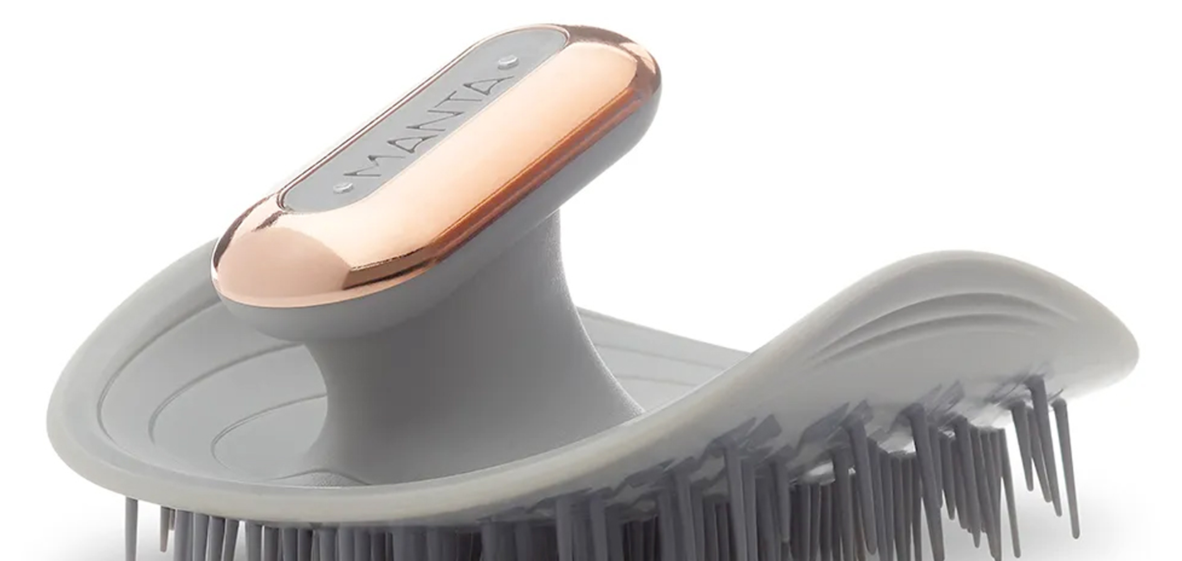
The result was the Manta brush, which features a flexible body and uniquely designed bristles that are intended to reduce tension on the hair shaft during brushing. The brush flexes to fit the contours of the head, and its bristles are designed to glide through hair without pulling or snagging. For people with fine, damaged, or thinning hair, this can make a significant difference to both comfort and hair health.
That origin story — a product born from love and a desire to ease suffering — gave Manta a powerful narrative that resonated with consumers and media alike. In a market saturated with hair tools making generic claims about smoothness and shine, Manta’s story stood out because it was rooted in genuine human experience rather than marketing strategy.
The Dragons’ Den Moment
Manta gained significant public attention when Tim Binnington appeared on the BBC’s Dragons’ Den, the popular television programme where entrepreneurs pitch their businesses to a panel of wealthy investors. The appearance generated considerable buzz and brought the brand to the attention of a national audience.
What made the Manta pitch particularly memorable was the combination of the product’s compelling backstory, its innovative design, and the commercial traction it had already achieved. Whether or not a deal was ultimately struck with the Dragons, the exposure alone was invaluable — Dragons’ Den appearances regularly generate spikes in website traffic and sales that far exceed whatever investment might be offered on the show.
For a small British brand competing against global beauty conglomerates, the national television exposure was the equivalent of millions of pounds in advertising spend. It accelerated brand awareness and drove consumer interest in a way that would have taken years to achieve through conventional marketing alone.
Revenue Streams and Business Model
Manta’s business model is built primarily around the sale of its signature brushes, which retail at a premium price point compared to conventional hair brushes. While a standard hair brush might cost anywhere from £3 to £15, Manta brushes are priced significantly higher, reflecting their specialised design, the quality of materials used, and the brand’s positioning as a premium personal care product.
Direct-to-Consumer Sales
Like many modern consumer brands, Manta sells directly to customers through its own website. Direct-to-consumer sales are particularly attractive from a financial perspective because they eliminate the middleman, allowing the brand to capture the full retail margin on each sale. This is crucial for a company selling a single product at a premium price point — the higher margin per unit helps sustain the business even without the massive volumes that discount brands rely on.
The Manta website also serves as the primary platform for telling the brand’s story, educating consumers about the science behind the brush design, and building the kind of emotional connection that turns first-time buyers into loyal advocates.
Retail Partnerships
Beyond direct sales, Manta has established partnerships with major retailers and beauty outlets. The brush has been stocked by high-profile retailers, giving it physical shelf presence that builds credibility and reaches customers who prefer to buy in store. Retail partnerships typically involve wholesale pricing, which means lower margins per unit than direct sales, but the volume and brand exposure they provide can more than compensate for the reduced margin.
Being stocked by reputable retailers also serves as a form of third-party validation. When a well-known beauty retailer chooses to carry a product, it signals to consumers that the product meets a certain standard of quality and commercial viability.
International Expansion
Manta has expanded beyond the UK into international markets, including the United States, Europe, and Asia. International expansion is a significant growth lever for consumer brands, as it opens up much larger addressable markets. The global hair care market is worth billions of pounds annually, and even capturing a tiny fraction of that market represents substantial revenue for a brand of Manta’s size.
Expanding internationally also diversifies risk — the brand is not dependent on any single market for its revenue, which provides a measure of resilience against economic downturns or competitive pressures in any one region.
Brand Value and Intellectual Property
A significant portion of Manta’s net worth lies in its brand equity and intellectual property. The brush’s unique design is protected by patents, which give the company a competitive moat that prevents direct copying by competitors. In the consumer products space, patent protection is invaluable because it allows the brand to maintain its premium pricing and market position without being immediately undercut by cheaper imitations.
The Manta brand itself — its name recognition, its emotional story, its association with hair health and gentle care — represents an intangible asset that would be difficult for a competitor to replicate. Brand equity of this nature takes years to build and can be worth multiples of a company’s annual revenue when it comes to valuation.
Celebrity and Professional Endorsements
Manta has attracted attention from hairdressers, trichologists, and beauty professionals who have endorsed the brush based on its design and performance. Professional endorsements carry significant weight in the beauty industry, where consumers often look to experts for guidance on product choices.
The brush has also been featured in numerous beauty publications, blogs, and social media posts by influencers and beauty editors. This organic media coverage — much of it unpaid — has helped to build the brand’s reputation and drive sales without the enormous marketing budgets that larger competitors can deploy.
Valuation Considerations
Valuing a private company like Manta involves considering several factors beyond simple revenue. Consumer brands in the beauty and personal care space are typically valued at a multiple of their annual revenue, with the exact multiple depending on growth rate, profit margins, brand strength, and market potential.
For a brand with Manta’s characteristics — strong brand story, patent-protected product, premium pricing, international presence, and demonstrated growth — valuation multiples tend to be on the higher end. Beauty and personal care brands have been attractive acquisition targets for larger consumer goods companies in recent years, with some transactions occurring at revenue multiples of three to five times or even higher.
If Manta’s annual revenue is in the low millions — which is plausible given its retail presence and direct sales — a valuation of £5 million to £15 million would be consistent with industry norms. The actual figure could be higher if the company is growing rapidly or if its intellectual property is considered particularly valuable.
The Competitive Landscape
Manta operates in a competitive market that includes everything from budget brushes sold in supermarkets to high-end tools from established brands like Tangle Teezer, Mason Pearson, and GHD. What sets Manta apart is its specific focus on gentle, damage-free brushing and its origin story, which gives it an emotional connection with consumers that most competitors lack.
Tangle Teezer, another British-founded brush brand, provides an interesting comparison point. Founded by Shaun Pulfrey — who, like Binnington, appeared on Dragons’ Den — Tangle Teezer grew into a global brand valued at tens of millions of pounds. Manta is at an earlier stage in its growth trajectory, but the parallels suggest that there is significant upside potential if the brand continues to execute well.
Looking Forward
The trajectory of Manta’s business suggests a brand that is still in its growth phase, with plenty of room to expand both geographically and in terms of product range. If the company chooses to extend its line beyond its core brush — into complementary hair care products, for instance — it could significantly increase both revenue and brand value.
For now, Manta’s estimated net worth of £5 million to £15 million reflects a company that has punched well above its weight. From a hairdresser’s personal mission to help his partner, to a globally recognised brand stocked in major retailers, Manta’s financial story is still being written — and the next chapters could be the most interesting ones yet.